
Charlton County Arrest Records and Charges
An arrest record can show the law-enforcement event: who was arrested, the arresting agency, booking date, reported charge, warrant link, bond status, and jail custody information when releasable. Charlton County does not publish a public online jail roster in the official sources reviewed, so arrest and booking checks rely on the Sheriff's Office phone line, in-person contact, and the sheriff Open Records Request form. The court charge record is different. It shows the accusation, indictment, citation, or other charging document that starts or updates the court case.
That distinction prevents two common errors. A booking charge is not a conviction, and a charge filed in court may later be amended, reduced, dismissed, dead docketed, or resolved by plea or trial. The full criminal case file is handled on the Charlton County criminal court records page; this page focuses on the arrest-to-charges pathway and how to find the records that explain it.
The official Charlton County sheriff page identifies the local sheriff office and contact path for law-enforcement records.
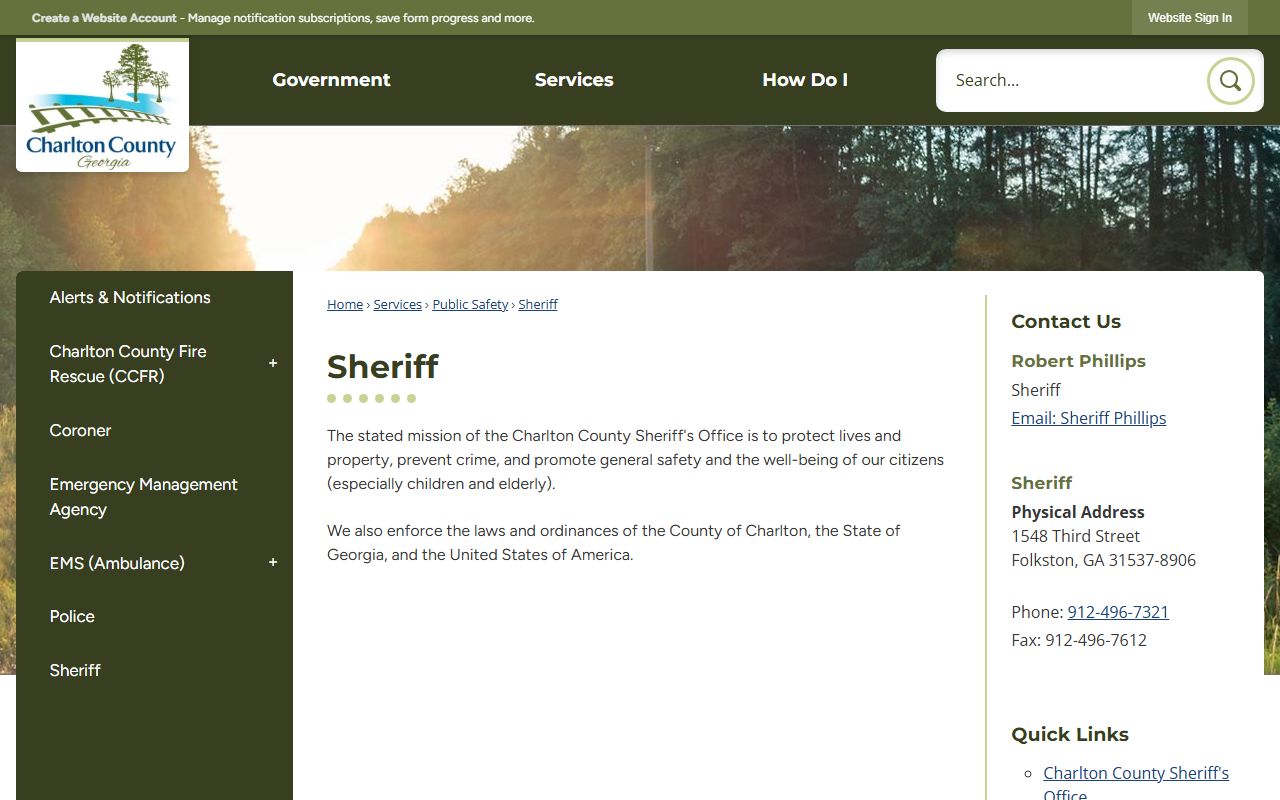
Use the sheriff source for law-enforcement records, then confirm filed charges through the court record.
Search Charlton County Arrest Records
The documented sheriff route is the Open Records Request form. It covers accident reports, incident reports, case reports, traffic citations, 911 records, and other records. For an arrest or booking-related request, select the closest category and describe the record clearly. Include the subject name, event date, incident number if known, officer name if known, location, and the exact record wanted.
- Call the Sheriff's Office or jail at 912-496-7321 for current custody or booking questions.
- Use the sheriff Open Records Request form for releasable incident, case, booking, traffic citation, or 911 records.
- Check the court file through PeachCourt account access or the clerk if the question is about filed charges.
- Contact Magistrate Court for warrant or preliminary matters when the arrest started there.
- Use PayYourTix and the issuing court for traffic citations.
- Use GDC or VINE only when the question is custody status, not the court charge itself.
The Charlton County Sheriff's Office Open Records Request form is the official web form for sheriff-held reports.
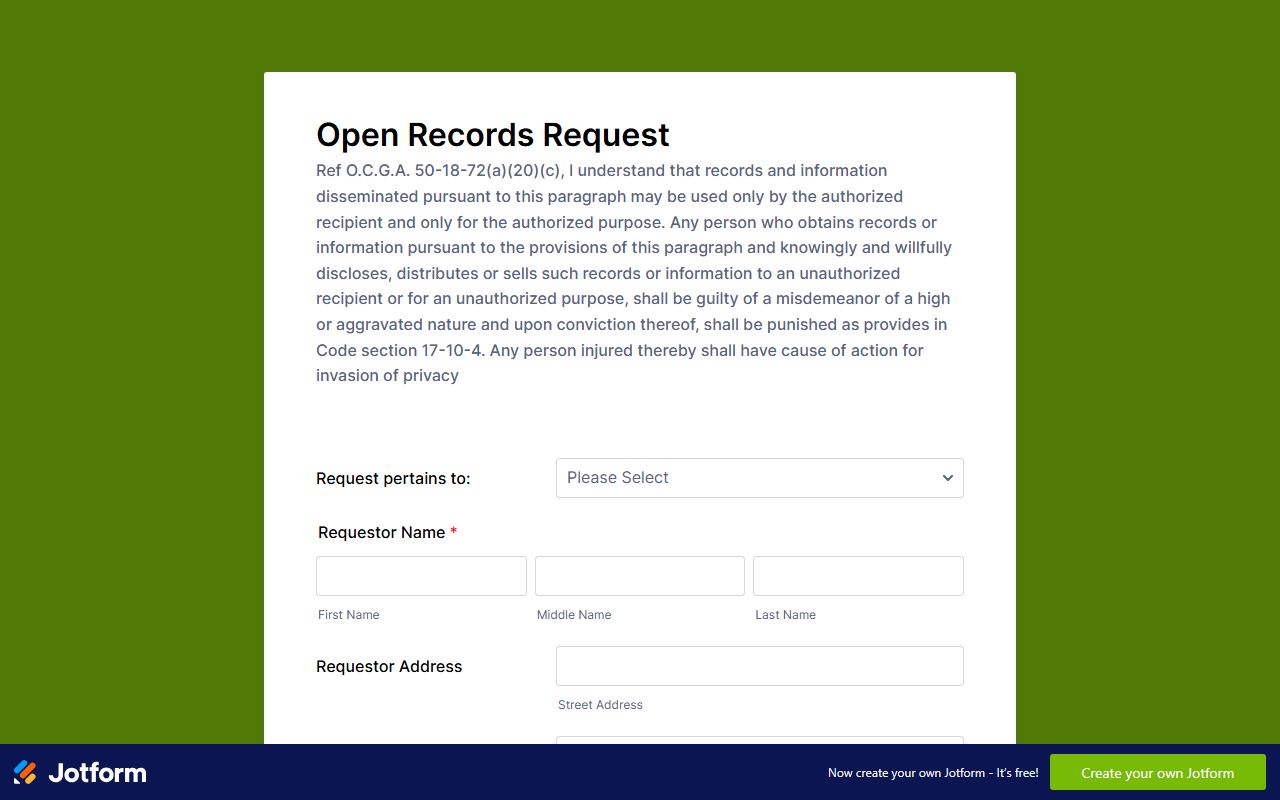
That form is the best documented path for sheriff records when no public arrest database exists.
Charlton County Court Charges Filed
After an arrest, the charge that matters in court is the charge filed or accepted in the court case. It may not match the first booking description. Prosecutors can file accusations, seek indictments, reduce counts, dismiss counts, or amend allegations. Traffic cases may begin with a citation. Warrant-based cases may begin in Magistrate Court before moving to another court.
| Document | Typical Use | What to Check |
|---|---|---|
| Complaint or warrant paperwork | Early criminal, warrant, or preliminary stage | Issuing court, alleged offense, bond, and next date. |
| Accusation | Formal prosecutor charging document, often misdemeanor or non-indicted matters | Count text, statute, filing date, prosecutor, amendments. |
| Indictment | Grand-jury felony charging document | Counts, offense dates, severity, arraignment, and later disposition. |
| Citation | Traffic or ordinance charging document | Court, citation number, charge, payment or contest deadline. |
Charlton County Charge Status
Charge status changes are often more important than the first charge text. A case can begin with several counts and end with only one conviction, a dismissal, a nolle prosequi, or a dead-docket entry. Read each count separately and match the charge line to the final disposition and sentence. If the online account view is unclear, request the certified disposition or final sentence from the clerk.
| Status | Meaning |
|---|---|
| Filed | The charge has been entered in the court case. |
| Amended | The charge wording, count, severity, or statute changed after filing. |
| Reduced | The charge was lowered to a lesser offense or severity. |
| Dismissed | The count or case was dismissed by order, motion, or prosecutor action. |
| Nolle prosequi | The prosecutor chose not to pursue the charge at that time. |
| Dead docket | The case is inactive but not necessarily finally dismissed. |
| Disposed | The court has entered an outcome for the charge or case. |
Charlton County Charging Offices
Felony charges generally route through the Waycross Judicial Circuit District Attorney. State Court misdemeanor and traffic prosecution can involve the Charlton County Solicitor-General. PAC lists Marilyn Bennett as District Attorney for Charlton County and Bradley L. Collins as Solicitor-General. The Governor's 2024 announcement said Collins was appointed Solicitor of Charlton County after a vacancy. These offices matter for formal charging decisions and for some record-restriction requests.
The public defender system is also part of the practical record path. The Georgia Public Defender Council lists Charlton County in the Waycross Circuit with the office in Waycross. Defense counsel can help interpret whether a charge, bond, warrant, or disposition means what the public docket appears to show.
The Waycross Circuit public defender office page gives the circuit-level defense contact context.
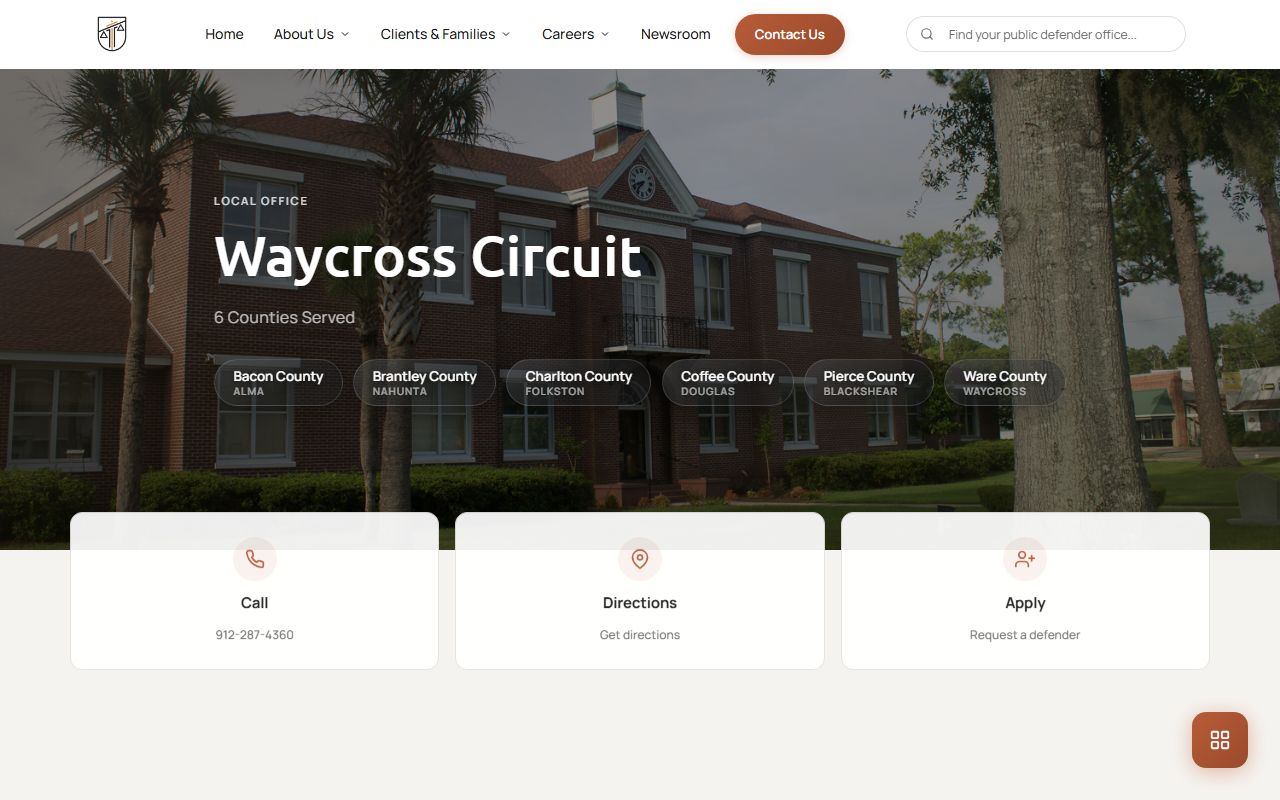
Defense and prosecutor records are not the clerk's public case file, but they help explain charge decisions and restriction paths.
Charlton County Charge vs Conviction
A charge is an allegation. A conviction is a final court outcome after a guilty plea, guilty verdict, or other conviction entry. Arrest records and booking records may show suspected offenses before court review. Court charge records show the filed counts. Criminal court records show the later plea, trial, dismissal, sentence, or final disposition. Confusing those records can make a person look convicted when the court file does not show that result.
| Point | Charge | Conviction |
|---|---|---|
| Source | Booking, warrant, accusation, indictment, citation, or complaint. | Final court disposition, plea, verdict, or sentence. |
| Timing | Usually early in the case. | After court action resolves the count. |
| How to verify | Read the charging document and docket entries. | Read the disposition, sentence, and final order. |
Charlton County Warrants and Bond
Arrest records often connect to warrants and bond, but warrant status is its own question. The sheriff site identifies Captain Marty Crews as the warrants and courts officer. Magistrate Court may handle arrest warrants or preliminary matters. Superior and State Court may issue bench warrants when a person misses court or violates an order. Bond details may appear in a booking record, warrant record, or court order, and those records should be matched before relying on one source.
The Charlton County Sheriff's emergency and non-emergency numbers page gives the official phone context for sheriff contact paths.
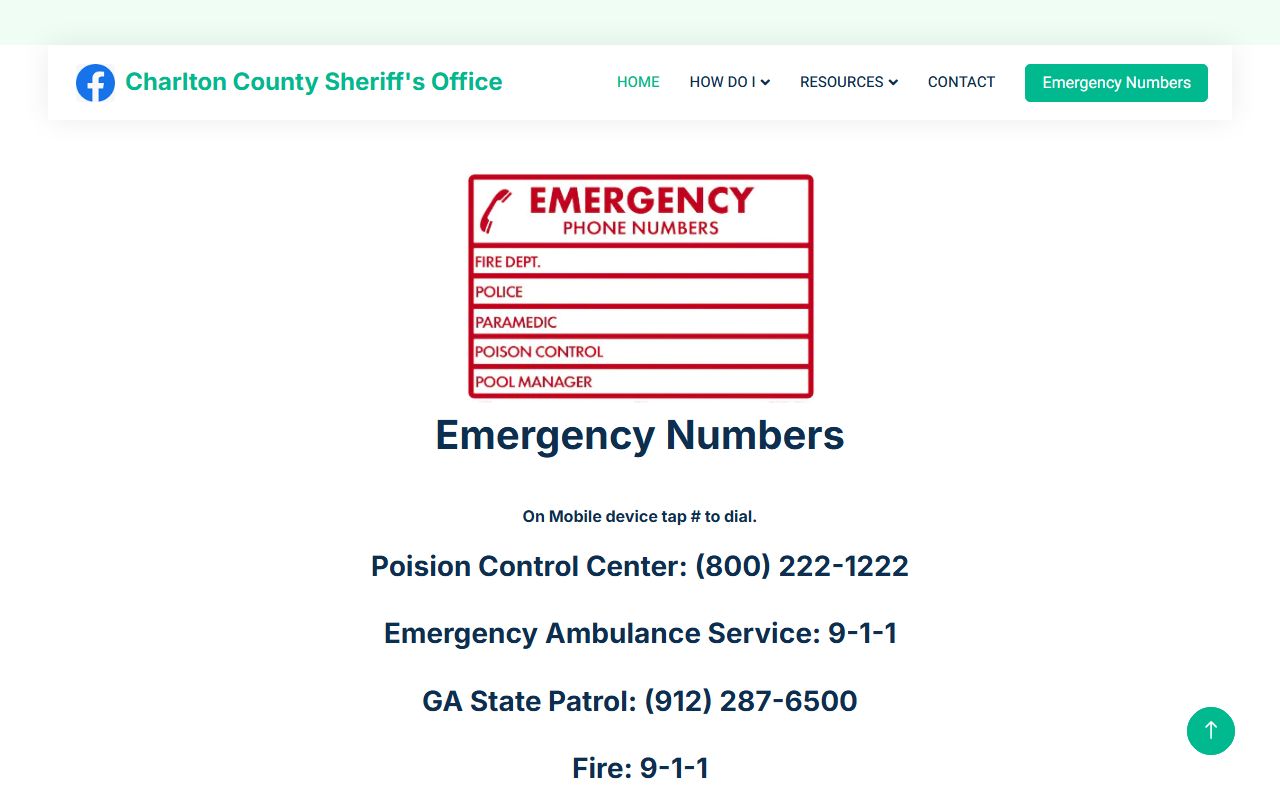
Use emergency numbers only for emergencies; routine warrant, arrest, and records questions should use the proper sheriff or court contact.
Charlton County Criminal History Requests
The sheriff's linked name-based criminal history consent and inquiry PDF includes result checkboxes such as no NCIC/GCIC warrant and possible NCIC/GCIC warrant, but that is a consent or inquiry process. It is not a public warrant database and not a public arrest-record search. Name-based criminal history checks may require the subject's identity information, purpose code, agency signature, and notary details.
Georgia record restriction under O.C.G.A. 35-3-37 can limit non-criminal-justice access to qualifying criminal history. For arrests after July 1, 2013, GBI guidance points users to the prosecutor for restriction requests. For older arrests, the person applies at the arresting agency. Court convictions that qualify for newer sealing or restriction paths may need a court petition and judge's order.
Restricted Charlton County Arrest Records
Some arrest and charge records are not public, or are public only in redacted form. Juvenile records are restricted. Sealed court files cannot be released by the clerk without authority. Adoption records are sealed and locked. Active investigations, search warrants, protected addresses, medical details, Social Security numbers, financial account numbers, and minor identifying details may be withheld or redacted.
Note: Open-records access does not override sealed court orders, juvenile protections, or restricted criminal-history rules.
Public Record Search
Sponsored Results